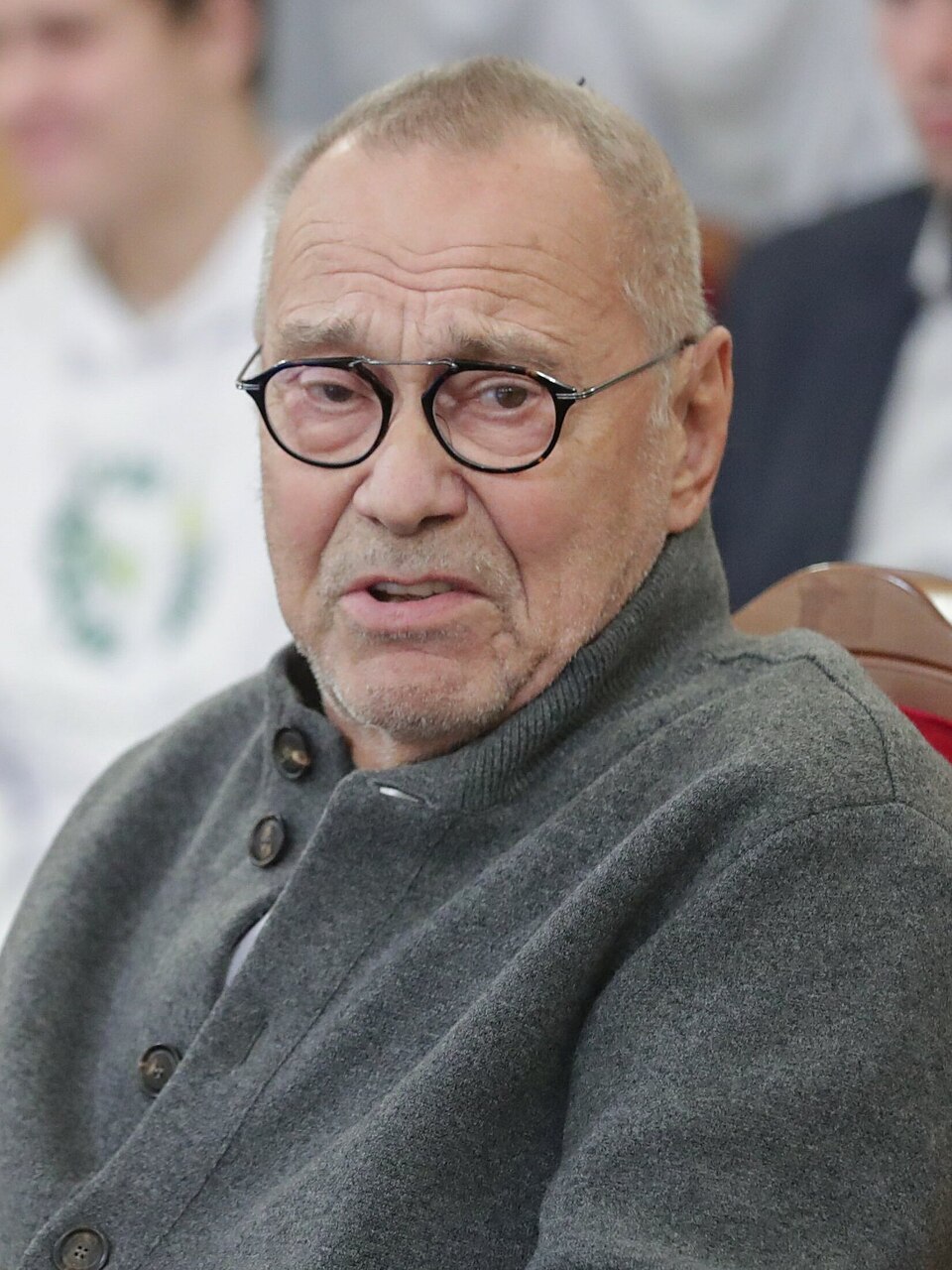
Andrei Konchalovsky: The Director Who Launched Danny Trejo and Redefined Cinematic Worth
Andrei Konchalovsky stands as a titan in global cinema, a director whose illustrious career has spanned continents, languages, and genres. While many might search for "andrei konchalovsky net worth" hoping for a simple financial figure, understanding his true value requires a deeper dive into his profound artistic contributions, his enduring legacy, and perhaps most notably, his keen eye for talent that helped launch the career of an unlikely Hollywood icon: Danny Trejo. Konchalovsky's wealth isn't merely measured in dollars but in the timeless films he's crafted and the indelible mark he's left on the industry and its stars.
Born into a lineage of Russian artistic brilliance – his brother is Nikita Mikhalkov, and his grandfather was the acclaimed artist Pyotr Konchalovsky – Andrei Sergeyevich Mikhalkov-Konchalovsky forged his own path, blending the philosophical depth of Russian cinema with the commercial appeal of Hollywood. His journey across the Iron Curtain and back has given his filmography a unique breadth and perspective, making him one of the most intriguing figures in modern filmmaking.
The Accidental Actor and the Astute Director: Danny Trejo's Discovery
The story of Danny Trejo's entry into acting is legendary, and it's a testament to Andrei Konchalovsky's unique vision that it happened at all. In 1985, Konchalovsky was directing the gritty action-thriller
Runaway Train, based on an original screenplay by Akira Kurosawa. The film, set in the harsh Alaskan wilderness, required an ensemble of rugged, authentic characters.
Trejo, then known primarily for his boxing prowess and a tough life that included stints in correctional facilities, was working as a drug counselor. He was initially hired to be a boxing coach for actor Eric Roberts on the set. However, a serendipitous encounter changed everything. Konchalovsky, observing Trejo's intense presence and distinctive facial features – including his iconic tattooed chest – recognized a raw authenticity that couldn't be taught. He saw beyond Trejo's non-traditional background and instead perceived a compelling cinematic quality.
Konchalovsky reportedly approached Trejo directly, asking if he'd be interested in a small role as a boxer in the film. Trejo, with no prior acting experience, agreed. This seemingly minor casting decision was a monumental moment. Konchalovsky’s willingness to cast a non-professional whose real-life experiences deeply informed his screen presence was revolutionary. It demonstrated a director unafraid to challenge conventional casting, prioritizing genuine character over polished performance. This brave choice not only earned Trejo his Screen Actors Guild card but also laid the groundwork for a prolific career that would see him become one of Hollywood's most recognizable and beloved character actors. For more insights into Konchalovsky's work on this film, see
Andrei Konchalovsky: Behind Runaway Train and Shy People.
Beyond *Runaway Train*: Konchalovsky's Diverse Filmography
While
Runaway Train is a pivotal moment for Trejo, it represents just one facet of Konchalovsky's expansive career. His filmography showcases remarkable versatility, moving effortlessly between Soviet-era masterpieces and Hollywood blockbusters, historical epics, and intimate dramas.
Before his ventures into American cinema, Konchalovsky made a significant name for himself in the Soviet Union. Films like
The First Teacher (1965) and
Asya's Happiness (1967) are celebrated for their poetic realism and profound exploration of the human condition in rural Russia.
Asya's Happiness, in particular, utilized non-professional actors and documentary-style filmmaking, foreshadowing his later casting choices with Trejo. These early works established his reputation as a director with a keen social conscience and an unparalleled ability to evoke genuine emotion.
His transition to Hollywood in the 1980s saw him direct diverse projects such as the aforementioned
Runaway Train, the poignant drama
Shy People (1987) starring Jill Clayburgh and Barbara Hershey, and even the action-comedy
Tango & Cash (1989) with Sylvester Stallone and Kurt Russell. His ability to navigate the different demands of both art-house and commercial cinema speaks volumes about his adaptability and skill.
Shy People, in particular, was praised for its intense performances and atmospheric depiction of a clash of cultures and values, earning Barbara Hershey the Best Actress award at the Cannes Film Festival.
After his Hollywood period, Konchalovsky returned to Russia, continuing to produce critically acclaimed works like
House of Fools (2002), which won the Special Jury Prize at the Venice Film Festival, and the epic historical drama
Paradise (2016), which earned him the Silver Lion for Best Director at Venice. His career trajectory demonstrates a relentless pursuit of artistic integrity, regardless of geographical or financial constraints. For a broader view of his professional journey, explore
Andrei Konchalovsky: Director's Career Beyond Net Worth Data.
What Defines a Director's 'Net Worth'? A Legacy Beyond Numbers
When considering "andrei konchalovsky net worth," it's important to understand that for a director of his caliber and artistic ambition, financial figures often tell only a fraction of the story. Unlike actors whose salaries are often public record, a director's income can fluctuate wildly based on project budgets, creative control, and back-end deals, making a precise public estimate challenging. Furthermore, Konchalovsky's extensive work across different national film industries adds another layer of complexity to any calculation.
However, his true "net worth" can be appraised through several lenses:
*
Artistic Impact: His films are studied in film schools worldwide. They provoke thought, showcase masterful storytelling, and push cinematic boundaries. This cultural capital is arguably more valuable than any bank balance.
*
Critical Acclaim: Numerous awards from major film festivals (Cannes, Venice) and consistent praise from critics underscore his lasting contribution to the art form.
*
Influence on Talent: His ability to spot and nurture talent, as evidenced by his role in launching Danny Trejo, has a ripple effect throughout the industry, empowering new voices and faces.
*
Historical Significance: His career mirrors and often comments on significant socio-political shifts, from the Cold War to post-Soviet Russia, making his work historically relevant.
*
Creative Independence: His deliberate choices to move between commercial and independent projects, and between different countries, indicate a director driven by artistic expression rather than purely financial gain. This creative freedom itself is a form of wealth.
Practical Tip: When assessing the "worth" of an artist like Konchalovsky, look beyond crude financial estimates. Consider their body of work, their influence on peers and the next generation, their critical reception, and their ability to create lasting cultural artifacts. This holistic view provides a far richer understanding of their legacy.
Konchalovsky's Enduring Influence and Impact
Andrei Konchalovsky's influence extends far beyond the confines of individual film sets. He is a director who has consistently demonstrated a profound commitment to exploring the complexities of the human spirit, often set against backdrops of significant social or historical change. His films frequently feature morally ambiguous characters, raw emotional landscapes, and a willingness to confront uncomfortable truths.
His unique blend of European arthouse sensibility with Hollywood storytelling techniques has made him a bridge between different cinematic traditions. He has taught at film schools, written extensively, and continues to be an active voice in international cinema, advocating for artistic integrity and challenging conventional narratives. His work continues to inspire new generations of filmmakers to look for authenticity, to value character development, and to understand the power of storytelling.
Conclusion
Andrei Konchalovsky's career is a testament to the idea that a director's true "net worth" transcends mere financial figures. His legacy is etched in the powerful stories he has told, the boundaries he has pushed, and the careers he has shaped. From giving Danny Trejo his start to crafting masterpieces in both Russian and Hollywood cinema, Konchalovsky has proven himself a visionary. His wealth lies not in an easily quantifiable sum, but in the enduring impact of his art, his profound insight into the human condition, and his unwavering dedication to the cinematic craft. He is, unequivocally, one of the most valuable figures in contemporary film history.